Mechanical keyboards have become popular because they feel better to type on and last longer than many basic keyboards. Each key uses its own switch, which can give clearer feedback and better control. Many people choose them for work, gaming, or both because they offer comfort and consistency over long hours.
The best mechanical keyboard feels good to type on, fits your desk, and matches how you work or play. These keyboards come in many sizes, from full-size boards with number pads to smaller layouts that save space. You can also choose different switch types that change how keys feel and sound when you press them.
When buying a mechanical keyboard, pay close attention to switch type, size, build quality, and noise level. Some switches feel light and quiet, while others feel firm and clicky. We spent many hours researching and testing top mechanical keyboards to find the ones that deliver the best typing experience and value.
Best Mechanical Keyboards
Below is our list of the best mechanical keyboards you can buy today. We chose these options based on build quality, typing feel, features, and price. Each pick fits different needs, from work and gaming to everyday use.
ASUS ROG Azoth

We recommend this keyboard for buyers who want a solid gaming board that feels refined right out of the box and still allows hands-on customization later.
Pros
- Smooth key feel with a clean, soft sound while typing
- Easy to switch between devices without hassle
- Sturdy build that feels stable during long sessions
Cons
- Higher price than many gaming keyboards
- Software setup takes time to learn
- Compact layout may not suit everyone
After using the ROG Azoth for daily work and gaming, the first thing we noticed was the typing feel. Each key press felt even and controlled, with no rattle or sharp noise. It stayed comfortable during long writing sessions and fast-paced matches.
Switching between our PC and laptop felt quick and reliable. We liked checking quick info on the small screen and adjusting settings with the knob instead of opening menus. These touches saved time and kept us focused.
The keyboard feels heavy and well-made, which helped it stay in place on the desk. Customizing switches felt simple, even for us without deep modding experience. Still, the cost may push some buyers to cheaper options if they want something basic.
Alienware Pro Wireless Keyboard

We recommend this keyboard for shoppers who want a solid wireless mechanical board that feels stable, sounds clean, and works well for both gaming and daily typing.
Pros
- Feels firm on the desk with no sliding during fast play
- Typing sounds soft and controlled, not sharp or hollow
- Wireless connection stays steady and quick
Cons
- Layout feels tight if you prefer full-size keys
- Software takes time to learn
- Price sits higher than many casual options
After using this keyboard for several days, we noticed how planted it feels the moment it hits the desk. The wide rubber base grips well, even during fast matches. We never had to adjust it once play started.
Typing feels smooth and controlled. The keys return fast and land with a clean sound that stays easy on the ears. Long writing sessions felt comfortable, and our hands did not tire as quickly as expected.
Wireless use worked without hiccups. Switching between devices felt simple, and the keyboard stayed responsive. When packing it up, the built-in dongle storage made travel easier and less stressful.
The smaller layout saves space, but it may take time to adjust if you rely on extra keys. Once we adapted, the compact size felt efficient and well balanced for both work and play.
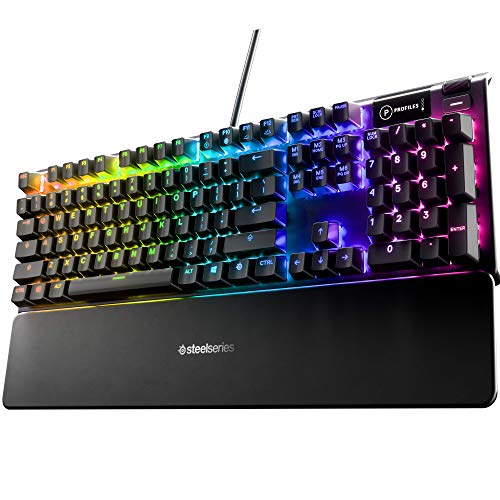
SteelSeries Apex Pro TKL Wireless

We recommend this keyboard for gamers who want fast response, deep control over key feel, and a clean desk setup without wires.
Pros
- Keys respond exactly how we set them for different games
- Wireless play feels steady with no lag during sessions
- Compact layout leaves more room for mouse movement
Cons
- Price sits higher than most mechanical boards
- Software takes time to learn and fine-tune
- Typing sound may feel sharp for quiet rooms
After using the Apex Pro TKL Wireless for a few days, the adjustable keys stood out right away. We could set light presses for movement and deeper presses for skills, which helped avoid mistakes in tense moments.
Wireless use felt solid during long gaming nights. We switched between devices without hassle, and the keyboard stayed responsive the whole time. The compact size also made our desk feel less crowded.
Daily typing felt smooth, though not silent. The keys favor speed over softness, so this board fits gaming better than shared workspaces. Overall, it delivered control and consistency we could feel every time we played.
8Bitdo Retro Mechanical Keyboard

This keyboard fits buyers who want a solid mechanical feel with a retro look and flexible wireless use without paying custom prices.
Pros
- Crisp, clicky typing that feels satisfying right away
- Easy switching between devices without hassle
- Fun retro design that stands out on a desk
Cons
- Software feels slow and not very clear
- Flat typing angle may not suit everyone
- Clicky sound may be too loud for shared spaces
After using it for daily typing and light gaming, the keys feel sharp and consistent. Each press gives clear feedback, which helps with accuracy. The board feels dense and steady, and it does not slide around during use.
Switching between Bluetooth, wireless, and cable took seconds. We moved from a PC to a tablet without trouble. That flexibility makes it easy to use across work and play setups.
The retro look adds charm, and the large extra buttons are handy once set up. Still, the setup app needs patience, and the loud clicks may bother others nearby. For us, the typing feel outweighs those limits.
HK GAMING GK61

This keyboard makes sense for buyers who want a compact, fast mechanical board that feels solid for daily gaming and typing.
Pros
- Quick key response that feels smooth in games
- Small size frees desk space right away
- Bright RGB that looks clean, not distracting
Cons
- No arrow keys can slow some tasks
- Software takes time to learn
- Keys feel light for heavy typists
After using the GK61 for several days, we noticed how fast the keys react. Movement in games feels sharp, and quick taps register without delay. The optical switches feel smooth and consistent across the board.
The 60% layout saved us a lot of desk space. Mouse movement feels less cramped, which helps during long sessions. Still, the missing arrow keys took some adjustment when writing or editing.
RGB lighting stands out in a good way. Colors look even and bright, and we changed effects without hassle. The board feels sturdy, and the detachable cable makes it easy to pack up and move.
Overall, the GK61 fits gamers who want speed and simplicity. It works best if you value desk space and fast input over extra keys.
Buying Guide
We choose a mechanical keyboard by matching it to how we work and play. Size, switch feel, and build quality matter most. We also check comfort features that support long sessions.
Layout affects desk space and reach. Smaller boards save space, while full-size boards keep a number pad. We should pick what fits our workflow and posture.
Key switch type changes sound and feel. We test for travel, force, and noise. Quiet switches suit shared spaces, while tactile feedback helps with typing accuracy.
| Feature | What to Look For | Why It Matters |
|---|---|---|
| Switch feel | Linear, tactile, or clicky | Controls speed and feedback |
| Actuation force | Light to medium | Reduces finger fatigue |
| Noise level | Low to high | Fits the room and use |
Build quality supports daily use. We look for a solid frame, stable keys, and clear legends. A heavier base often stays put.
Connectivity shapes flexibility. Wired options offer steady input, while wireless adds mobility. We check battery life if we go wireless.
| Option | Consideration |
|---|---|
| Wired | Consistent signal |
| Wireless | Desk freedom |
| Cable | Detachable for easy swaps |
Comfort features add value. Adjustable feet help angle the board. Keycap material affects grip and wear. We also check software support for remapping keys.
Frequently Asked Questions
We cover how to choose the right keyboard, how switches feel, and how layouts change daily use. We also address gaming picks, cleaning steps, and switch mounting options.
What are the key factors to consider when choosing a mechanical keyboard?
We look at switch type, layout size, and build quality first. These choices affect feel, desk space, and long-term use.
We also consider keycap material, connectivity, and software support. These details shape comfort and setup speed.
How do the different switch types affect typing experience and performance?
Linear switches move smoothly and feel quiet. We often choose them for gaming and fast typing.
Tactile switches give a small bump you can feel. Clicky switches add sound with that bump, which some users enjoy but others avoid.
What are the benefits of a tenkeyless (TKL) mechanical keyboard vs a full-size one?
A TKL keyboard removes the number pad to save space. We gain more room for mouse movement and a cleaner desk.
A full-size keyboard keeps the number pad for data entry. We prefer it for office work and spreadsheets.
Can you recommend some top-rated mechanical keyboards for gaming?
We often recommend the Corsair K70 RGB Pro for its solid build and fast switches. It supports low-latency input and strong software.
We also like the Logitech G Pro X for its compact size and swappable switches. The SteelSeries Apex Pro works well for adjustable actuation.
How do I properly maintain and clean a mechanical keyboard to ensure its longevity?
We unplug the keyboard and remove keycaps with a puller. We use compressed air to clear dust from the plate.
We wipe keycaps with mild soap and water, then dry them fully. We avoid harsh cleaners on the switches and case.
What is the difference between hot-swappable and soldered switches in mechanical keyboards?
Hot-swappable boards let us change switches without tools. We pull out old switches and press in new ones.
Soldered boards fix switches to the PCB. We need soldering tools to replace them, which limits easy customization.